
Electrical and Electronics Engineering (EEE)
About the Department
The Department of Artificial Intelligence & Data Science is committed to delivering high-quality education and advanced technical knowledge in emerging technologies. Established with modern infrastructure, the department provides a strong foundation in AI, data analytics, and intelligent systems, preparing students to meet industry demands.
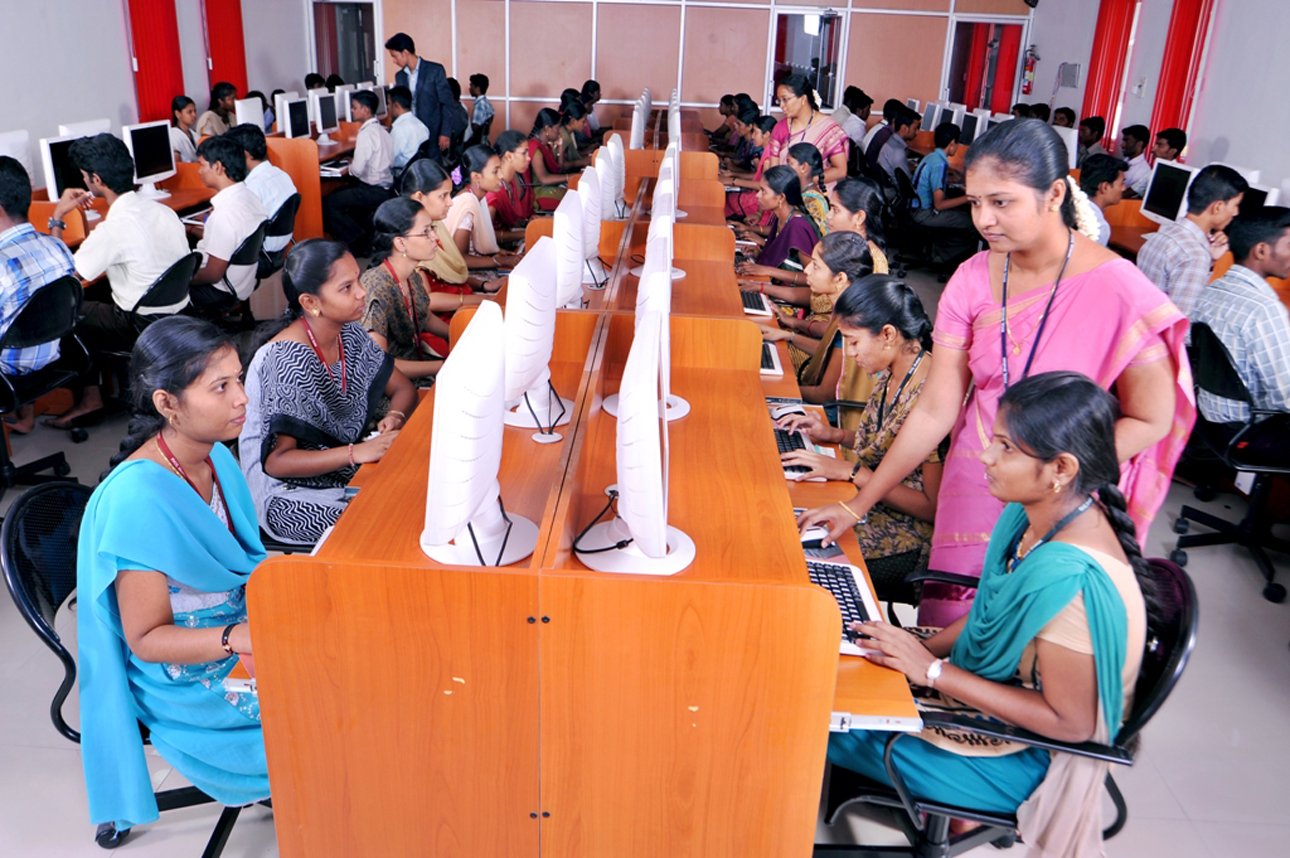
The department is equipped with well-established, fully air-conditioned computer laboratories featuring state-of-the-art infrastructure. Students have access to laboratories round the clock, enabling continuous learning and hands-on experience. The labs are furnished with high-performance systems from leading brands such as HP, Dell, and Acer, along with dedicated servers to support advanced computing requirements.
All laboratories are supported by structured networking facilities including Wi-Fi, LAN (CAT6), fibre connectivity, and the latest software tools. The infrastructure is regularly upgraded to ensure students have access to the most current technologies and resources for academic and research excellence.
DEPARTMENT VISION
To be a center of excellence in Electrical and Electronics Engineering, fostering innovation, research, and ethical values to contribute to sustainable technological development for the betterment of society.
DEPARTMENT MISSION
- To provide quality education in Electrical and Electronics Engineering through a dynamic curriculum and effective teaching methodologies.
- To make our students capable of building their carrier by providing strong foundation in Electrical and Electronics Engineering and also meet the growing challenges in Industry.
- To provide prerequisite skills for the needs of higher education and research developments.
PROGRAM EDUCATIONAL OBJECTIVES (PEOs)
PEO -1
Technical Competence : To prepare graduates with strong fundamentals in Electrical and Electronics Engineering for successful careers in industry, academia, or as entrepreneurs.
PEO -2
Employability and Higher Education : To equip students with analytical and problem-solving skills to pursue higher studies and enhance their employability in core and interdisciplinary domains.
PEO -3
Ethics and Social Commitment : To instill professional ethics, social responsibility, and environmental consciousness for the betterment of society and sustainable development.
PROGRAM SPECIFIC OUTCOMES (PSOs)
PSO-1
Electrical System Design & Implementation: Graduates will be able to analyze, design, and develop electrical systems and components such as machines, drives, and power systems by applying fundamental knowledge and modern engineering tools.
PSO-2
Electronics, Control, and Automation: Graduates will be able to design and apply electronic circuits, instrumentation, and control systems, including embedded systems and automation technologies, for solving real-world engineering problems.
PSO-3
Energy Systems & Sustainability: Graduates will demonstrate the ability to work on power generation (including renewable energy), transmission, and distribution systems, with an emphasis on energy efficiency and environmental sustainability.
PROGRAM OUTCOMES (POs)
PO-1
Engineering knowledge: Apply the knowledge of mathematics, science, engineering fundamentals, and engineering specialization to the solution of complex engineering problems.
PO-2
Problem analysis: Identify, formulate, research literature, and analyze engineering problems to arrive at substantiated conclusions using first principles of mathematics, natural, and engineering sciences.
PO-3
Design/development of solutions: Design solutions for complex engineering problems and design system components, processes to meet the specifications with consideration for the public health and safety, and the cultural, societal, and environmental considerations.
PO-4
Conduct investigations of complex problems: Use research-based knowledge including design of experiments, analysis and interpretation of data, and synthesis of the information to provide valid conclusions.
PO-5
Modern tool usage: Create, select, and apply appropriate techniques, resources, and modern engineering and IT tools including prediction and modeling to complex engineering activities with an understanding of the limitations.
PO-6
The engineer and society: Apply reasoning informed by the contextual knowledge to assess societal, health, safety, legal, and cultural issues and the consequent responsibilities relevant to the professional engineering practice.
PO-7
Environment and sustainability: Understand the impact of the professional engineering solutions in societal and environmental contexts, and demonstrate the knowledge of, and need for sustainable development.
PO-8
Ethics: Apply ethical principles and commit to professional ethics and responsibilities and norms of the engineering practice.
PO-9
Individual and team work: Function effectively as an individual, and as a member or leader in teams, and in multidisciplinary settings.
PO-10
Communication: Communicate effectively with the engineering community and with society at large. Be able to comprehend and write effective reports documentation. Make effective presentations, and give and receive clear instructions.
PO-11
Project management and finance: Demonstrate knowledge and understanding of engineering and management principles and apply these to one’s own work, as a member and leader in a team. Manage projects in multidisciplinary environments.
PO-12
Life-long Learning: Recognize the need for and engage in independent and life-long learning in the broadest context of technological change.
- To provide strong foundational knowledge in electrical, electronics, and allied engineering disciplines through a well-structured curriculum and effective teaching–learning practices.
- To develop analytical and problem-solving skills in students by exposing them to real-world electrical engineering challenges, laboratories, and industry-oriented projects.
- To encourage innovation and research aptitude by promoting participation in technical competitions, paper publications, patents, and funded research activities.
- To equip students with practical and professional skills through industry interaction, internships, workshops, and certification programs aligned with emerging technologies.
- To instill ethical values, teamwork, and leadership qualities so that graduates contribute responsibly to society and the engineering profession.
Faculty Members
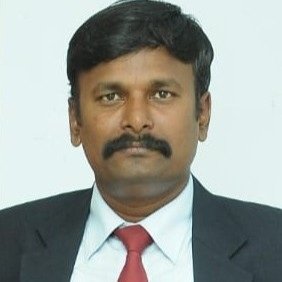
Dr.P. MANIKANADAN
Professor & Head
Electrical & Electronics Engineering
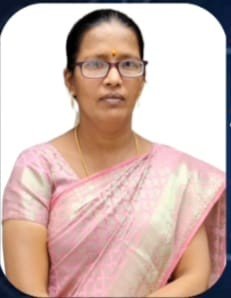
ARUL SELVANAYAKI D
Assistant Professor
Electrical & Electronics Engineering
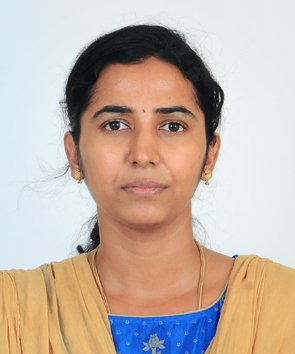
NITHYA KALYANI S
Assistant Professor
Electrical & Electronics Engineering

S.R.BALAN
Assistant Professor
Electrical & Electronics Engineering
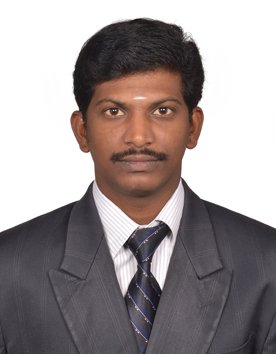
HARI KRISHNAN K
Assistant Professor
Electrical & Electronics Engineering
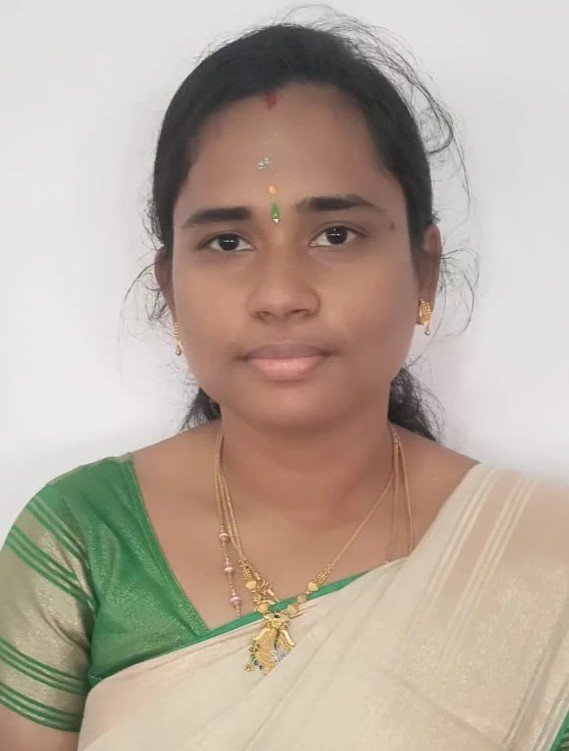
RAMYA B
Assistant Professor
Electrical & Electronics Engineering
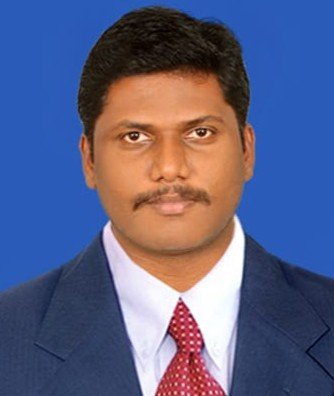
PRABHU A
Assistant Professor
Electrical & Electronics Engineering
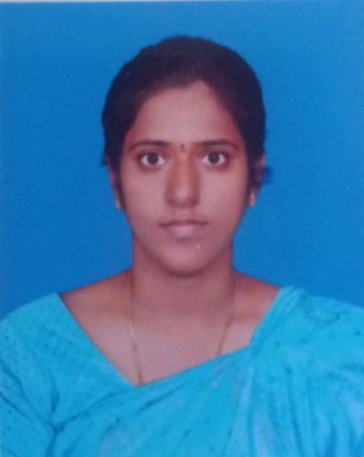
RAGAVI R
Assistant Professor
Electrical & Electronics Engineering
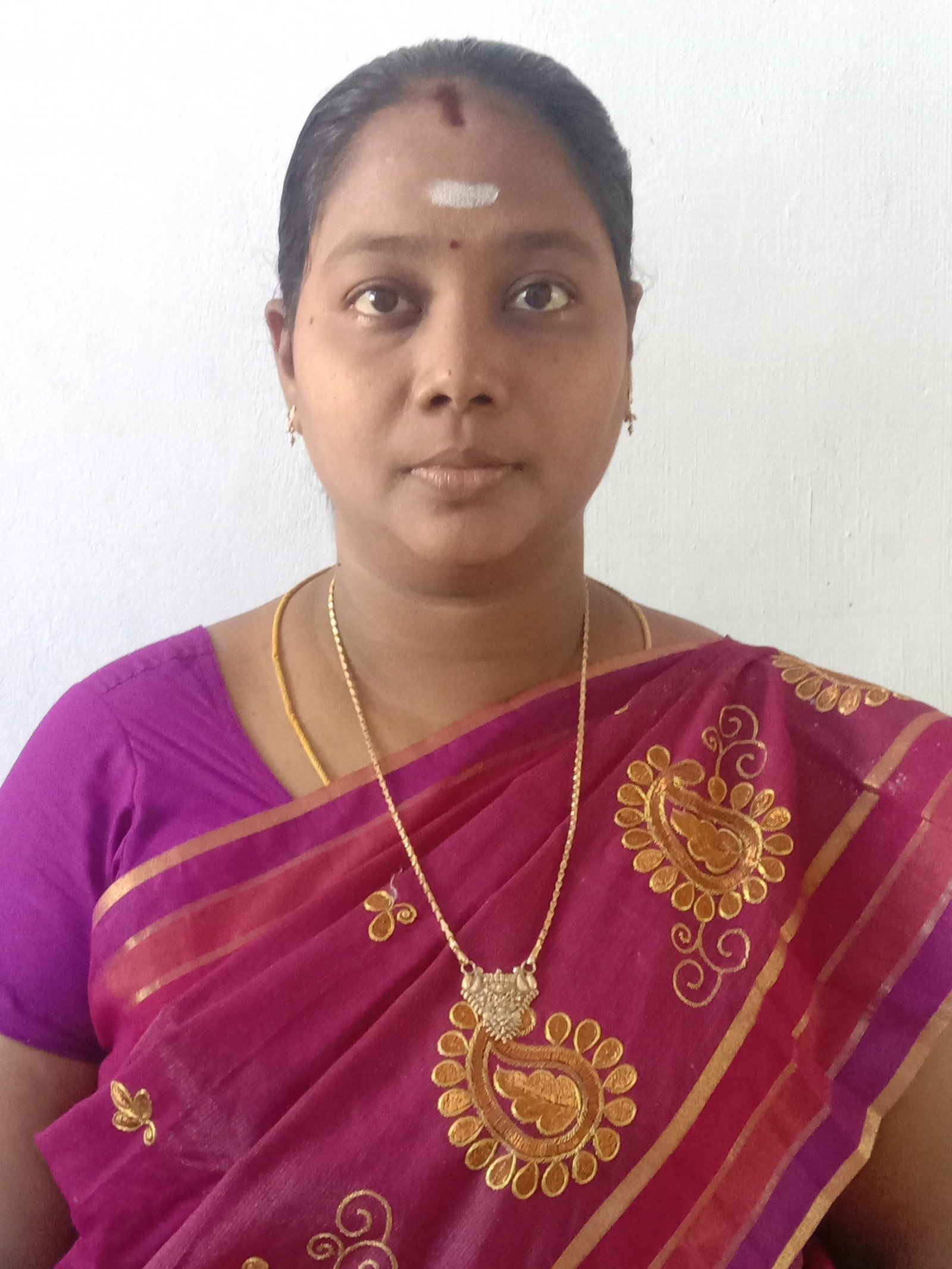
NITHYA M
Assistant Professor
Electrical & Electronics Engineering
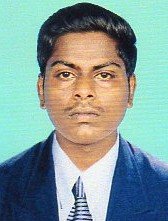
SANKAR B
Assistant Professor
Electrical & Electronics Engineering
| S.No | Equipment Name | Quantity |
|---|---|---|
| 1 | DC Shunt Motor with Loading Arrangement | 2 |
| 2 | DC Shunt Motor Coupled with Three Phase Alternator | 3 |
| 3 | DC Series Motor with Loading Arrangement | 1 |
| 4 | DC Compound Motor with Loading Arrangement | 1 |
| 5 | DC Shunt Motor Coupled with DC Compound Generator | 1 |
| 6 | DC Shunt Motor Coupled with DC Shunt Generator | 2 |
| 7 | DC Shunt Motor Coupled with DC Series Generator | 1 |
| 8 | DC Shunt Motor Coupled with Three Phase Salient Pole Alternator | 1 |
| 9 | Three Phase Induction Motor with Loading Arrangement | 2 |
| 10 | Single Phase Induction Motor with Loading Arrangement | 2 |
| 11 | Slip Ring Induction Motor with Loading Arrangement | 1 |
| 12 | Single Phase Transformer | 7 |
| 13 | Three Phase Transformer | 2 |
| 14 | Tachometer (Digital/Analog) | 11 |
| 15 | Single Phase Auto Transformer | 3 |
| 16 | Three Phase Auto Transformer | 3 |
| 17 | Single Phase Resistive Loading Bank | 7 |
| 18 | Three Phase Resistive Loading Bank | 5 |
| 19 |
Rheostats: 720Ω, 1.2A (5), 360Ω, 1.5A (6), 200Ω, 1.7A (4), 50Ω, 5A (10), 10Ω, 20A (1) |
26 |
| 20 |
Ammeters: DC (0–2A, 0–5A, 0–20A, 0–30A) AC (0–2A, 0–5A, 0–20A) |
51 |
| 21 | Voltmeters (0–600V AC/DC) | 38 |
| 22 | Wattmeters (Various ranges: 150W to 6000W) | 22 |
| 23 | Rectifier (100A DC) | 1 |
| 24 | Starter | 1 |
| 25 | Synchronizing Equipment | 1 |
| 26 | Isolation Switch (3-port / 3-way) | 30 |
The laboratory is well-equipped with modern electrical machines and measuring instruments to facilitate practical learning and hands-on experience for students.
Year: 2011
Faculty: Mrs. D. Arul Selvanayaki (AP/EEE)
Technician: Mr. Gurusamy
To study characteristics and performance of DC and AC machines.
Equipment: DC machines, transformers, induction & synchronous machines.
- DC generator characteristics
- DC motor load tests
- Swinburne’s & Hopkinson’s test
- Transformer tests (OC, SC, Sumpner’s)
- Alternator regulation methods
- Induction motor tests
- Starter studies
Year: 2011
Faculty: Mrs. B. Ramya
Technician: Mr. Gurusamy
To provide fundamental knowledge on electrical wiring and safety practices.
- Basic wiring (lamp, fan, socket)
- Staircase wiring
- Fluorescent & LED wiring
- Energy meter wiring
- Fan regulator study
- Emergency lamp wiring
Year: 2011
Faculty: Mrs. B. Ramya
Technician: Mr. Gurusamy
To analyze performance of power semiconductor devices and converters.
Software: MATLAB/Simulink
- SCR, TRIAC, MOSFET, IGBT characteristics
- Controlled converters
- Choppers & inverters
- AC voltage controller
- Simulation of PE circuits
Year: 2011
Faculty: Mrs. B. Ramya
Technician: Mr. Gurusamy
Software: MATLAB/Simulink
- Verification of circuit laws
- Thevenin & Norton theorem
- Superposition & Maximum power transfer
- RLC transient & frequency response
- Three phase circuits
Year: 2011
Faculty: Mr. K. Hari Krishnan
Software: MATLAB/Simulink
- Load flow analysis
- Fault analysis
- Transient stability
- Economic dispatch
- Relay performance
Year: 2011
Faculty: Mr. K. Hari Krishnan
Software: MATLAB/Simulink
- System modeling
- Stability analysis
- Root locus & Bode plots
- PID controller design
- Mini projects
| S.No | Equipment Name | Quantity |
|---|---|---|
| 1 | DC Shunt Motor with Loading Arrangement | 2 |
| 2 | DC Shunt Motor Coupled with Three Phase Alternator | 3 |
| 3 | DC Series Motor with Loading Arrangement | 1 |
| 4 | DC Compound Motor with Loading Arrangement | 1 |
| 5 | DC Shunt Motor Coupled with DC Compound Generator | 1 |
| 6 | DC Shunt Motor Coupled with DC Shunt Generator | 2 |
| 7 | DC Shunt Motor Coupled with DC Series Generator | 1 |
| 8 | DC Shunt Motor Coupled with Three Phase Salient Pole Alternator | 1 |
| 9 | Three Phase Induction Motor with Loading Arrangement | 2 |
| 10 | Single Phase Induction Motor with Loading Arrangement | 2 |
| 11 | Slip Ring Induction Motor with Loading Arrangement | 1 |
| 12 | Single Phase Transformer | 7 |
| 13 | Three Phase Transformer | 2 |
| 14 | Tachometer (Digital/Analog) | 11 |
| 15 | Single Phase Auto Transformer | 3 |
| 16 | Three Phase Auto Transformer | 3 |
| 17 | Single Phase Resistive Loading Bank | 7 |
| 18 | Three Phase Resistive Loading Bank | 5 |
| 19 |
Rheostats: 720Ω, 1.2A (5), 360Ω, 1.5A (6), 200Ω, 1.7A (4), 50Ω, 5A (10), 10Ω, 20A (1) |
26 |
| 20 |
Ammeters: DC (0–2A, 0–5A, 0–20A, 0–30A) AC (0–2A, 0–5A, 0–20A) |
51 |
| 21 | Voltmeters (0–600V AC/DC) | 38 |
| 22 | Wattmeters (Various ranges: 150W to 6000W) | 22 |
| 23 | Rectifier (100A DC) | 1 |
| 24 | Starter | 1 |
| 25 | Synchronizing Equipment | 1 |
| 26 | Isolation Switch (3-port / 3-way) | 30 |
The laboratory is well-equipped with modern electrical machines and measuring instruments to facilitate practical learning and hands-on experience for students.
| S.No | Student Name | Class | Organization | Duration |
|---|---|---|---|---|
| 1 | V. Raj Kumar | IV EEE | Tamil Nadu Power Distribution Corporation, 110/11 kV Sub-station, Anuppankulam | 05.08.24 – 09.08.24 (5 Days) |
| 2 | M. Kalimuthu | IV EEE | Tamil Nadu Power Distribution Corporation, 110/11 kV Sub-station, Anuppankulam | 05.08.24 – 09.08.24 (5 Days) |
| 3 | M. Arunpandi | IV EEE | Tamil Nadu Power Distribution Corporation, 110/11 kV Sub-station, Anuppankulam | 05.08.24 – 09.08.24 (5 Days) |
| 4 | V. Ganesh Kumar | IV EEE | Tamil Nadu Power Distribution Corporation, 110/11 kV Sub-station, Anuppankulam | 05.08.24 – 09.08.24 (5 Days) |
| 5 | V. Veerapandi | IV EEE | Tamil Nadu Power Distribution Corporation, 110/11 kV Sub-station, Anuppankulam | 05.08.24 – 09.08.24 (5 Days) |
| 6 | Kaliraj | IV EEE | Tamil Nadu Power Distribution Corporation, 110/11 kV Sub-station, Anuppankulam | 05.08.24 – 09.08.24 (5 Days) |
| S.No | Year | Company / Organization | Location | Date |
|---|---|---|---|---|
| 1 | II Year | Binro Robotics Pvt. Ltd. | Sinro Arcade, Palarivattom, Kochi | 02.05.2023 |
| 2 | III Year | Vikram Sarabhai Space Center (VSSC) | Trivandrum, Kerala | 27.10.2023 |
| 3 | III Year | Kerala Electrical & Allied Engineering Co. Ltd. | Kerala | 23.04.2022 |
These training programs and industrial visits provide students with practical exposure, industry insights, and hands-on experience, helping them bridge the gap between academic learning and real-world engineering practices.
Faculty Members
| S.No | Reg 2025 | Reg 2021 | Second Year | Third Year | Fourth Year |
|---|---|---|---|---|---|
| 1 | MA25C01 Applied Calculus | IP3151 Induction Programme | MA3303 Probability and Complex Functions | EE3501 Power System Analysis | EE3701 High Voltage Engineering |
| 2 | EE25C03 Fundamentals of Electrical and Electronics Engineering | HS3152 Professional English - I | EE3301 Electromagnetic Fields | EE3591 Power Electronics | GE3791 Human Values and Ethics |
| 3 | UC25H01 Heritage of Tamils | MA3151 Matrices and Calculus | EE3302 Digital Logic Circuits | EE3503 Control Systems | GE3752 Total Quality Management |
| 4 | EN25C01 English Essentials – I | PH3151 Engineering Physics | EC3301 Electron Devices and Circuits | EE3009 Special Electrical Machines | OCS352 IoT Concepts |
| 5 | PH25C01 Applied Physics – I | CY3151 Engineering Chemistry | EE3303 Electrical Machines – I | EE3019 Embedded Control | OEC352 Electronic Devices |
| 6 | CY25C01 Applied Chemistry – I | GE3151 Python Programming | CS3353 C Programming and Data Structures | CCS334 Big Data Analytics | OCE354 Water Resource Management |
| 7 | CS25C01 Computer Programming:C | GE3152 Heritage of Tamils | EC3311 Electronic Devices Lab | MX3084 Disaster Risk Management | EE3027 Electric Vehicle Design |
| 8 | ME25C04 Makerspace | GE3171 Python Lab | EE3311 Electrical Machines Lab | EE3511 Power Electronics Lab | |
| 9 | UC25A01 Life Skills I | BS3171 Physics & Chemistry Lab | CS3362 C Programming Lab | EE3512 Control Lab | |
| 10 | UC25A02 Physical Education I | GE3172 English Lab | GE3361 Professional Development | ||
| 11 | NCC / NSS / NSO |
| S.No | Reg 2025 | Reg 2021 | Second Year | Third Year | Fourth Year |
|---|---|---|---|---|---|
| 1 | MA25C03 Transforms | HS3252 Professional English II | Environmental Sciences | Protection & Switchgear | Project / Internship |
| 2 | Tamils and Technology | Statistics | Transmission & Distribution | Power System Operation | |
| 3 | Basic Civil & Mechanical | Physics for EE | Linear IC | AI & ML | |
| 4 | Applied Physics II | Engineering Graphics | Measurement | SMPS & UPS | |
| 5 | Engineering Drawing | Circuit Analysis | Electrical Machines II | Renewable Energy | |
| 6 | English II | EV Design | |||
| 7 | Data Structures | NCC L1 | NCC L2 | Industrial Safety | |
| 8 | Innovation | Tamils Tech | Machines Lab II | NCC L3 | |
| 9 | Life Skills II | Engineering Practices Lab | Circuits Lab | Power System Lab | |
| 10 | Physical Education II | Circuits Lab | Microprocessor Lab | ||
| 11 | Foreign Language | Communication Lab |
- EE3004 HVDC and FACTS
- EE3007 Smart Grid
- EE3009 Special Electrical Machines
- EE3013 SMPS and UPS
- EE3014 Power Electronics for Renewable Energy Systems
- EE3019 Embedded Control for Electric Drives
- EE3020 Smart System Automation (Honor Student’s Elective)
- EE3022 VLSI Design (Honor Student’s Elective)
- EE3026 Design of Motor and Power Converters for Electric Vehicles
- EE3027 Electric Vehicle Design, Mechanics and Control
- EE3033 Hybrid Energy Technology
- EE3037 Power System Transients
- CCS334 Big Data Analytics
- CES335 Green Technology (Minor Student’s Elective)
- CES332 Sustainable Agriculture and Environmental Management (Minor Student’s Elective)
- OCS351 Artificial Intelligence and Machine Learning Fundamentals
- OCS352 IoT Concepts and Applications
- OEC352 Fundamentals of Electronic Devices and Circuits
- OCE354 Basics of Integrated Water Resources Management
- GE3751 Principles of Management
- GE3752 Total Quality Management
Mandatory Course-I – MX3084 Disaster Risk Reduction and Management
Mandatory Course-II – MX3089 Industrial Safety
Academic Year: 2025–2026
Department: Electrical & Electronics Engineering
The Department Advisory Committee (DAC) provides strategic guidance to enhance academic quality, strengthen industry relevance, promote focused research, and support overall departmental development in alignment with the institutional vision and outcome-based education (OBE) framework.
| S.No | Name | Designation | Organization / Affiliation | Role in DAC |
|---|---|---|---|---|
| 1 | Dr. P. Manikandan | Professor & Head | Dept. of EEE, Renganayagi Varatharaj College of Engineering | Chairperson |
| 2 | Dr. D. Prince Winston | Professor | Dept. of Electrical & Electronics Engineering | Member |
| 3 | Er. Genghiz Khan | Industry Expert | Customer Success Manager, Energy Management Business, Schneider Electric India Pvt. Ltd., Bengaluru | Industry Representative |
| 4 | Mr. M. Muthunarayanan | Senior Engineer | Reliance Retail Limited, Bengaluru | Industry Representative |
| 5 | Dr. P. Selvam | Academician | Government Engineering College, Thirunelveli | Academic Expert |
| 6 | Mr. M. Pasubathi | Alumni | 2021–2022 | Alumni Representative |
| 7 | Mr. B. Baskar | Parent | — | Parent Representative |
| 8 | Mr. M. Muniyaraj | Student | Final Year, Dept. of EEE | Student Representative |
| 9 | Mrs. Arul Selvanayagi | Assistant Professor | Dept. of Electrical & Electronics Engineering | Member |
| 10 | Mr. Harikrishnan | Assistant Professor | Dept. of Electrical & Electronics Engineering | Member Secretary |
Action plan for curriculum enrichment
Recommendations for training programs
Industry collaboration proposals
Research and innovation roadmap